 72 min
Bajeczki24
174 cartoons and children's films from 1947 to 2026: 131 films and shorts and 43 series, chosen for the whole household.
Newest
All →
Favourites
All →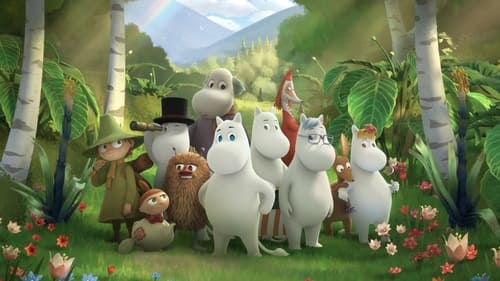 52 episodes
Moominvalley
Watch ↗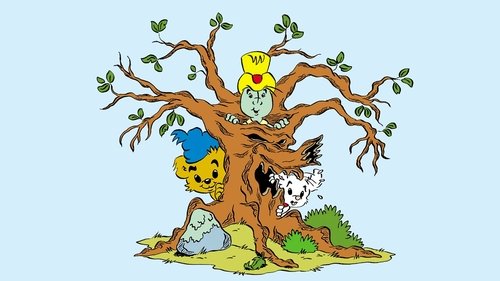 9 episodes
Bamse - The World's Strongest Bear
Watch ↗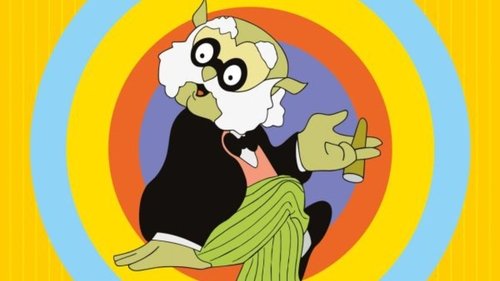 39 episodes
Kérem a következőt!
Watch ↗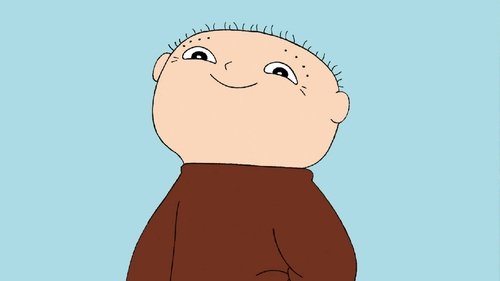 29 episodes
Alfie Atkins
Watch ↗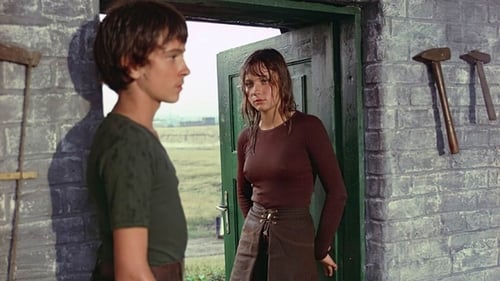 86 min
The End of the Holiday
Watch ↗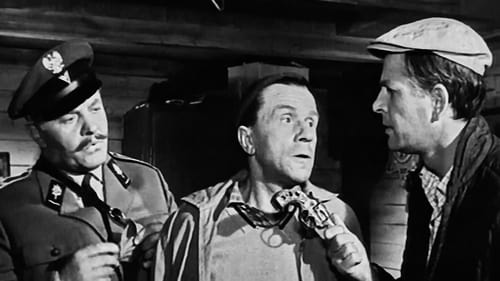 85 min
Wyspa złoczyńców
Watch ↗ 26 episodes
The Adventures of Koziołek Matołek
Watch ↗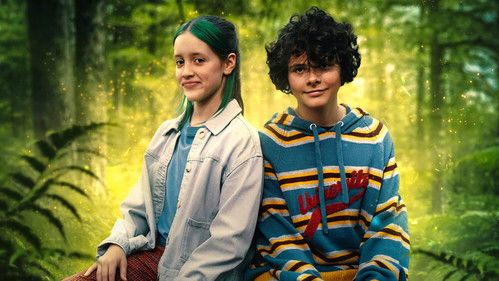 99 min
Pixie. The New Beginning
Watch ↗ 99 min
The Ring of Queen Ann
Watch ↗From Poland
All →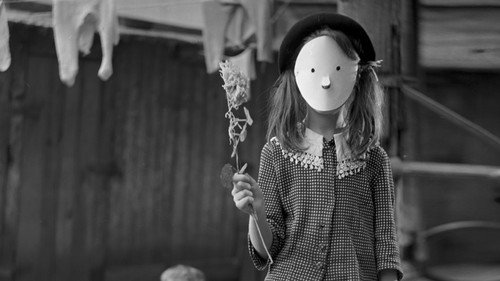



Fairy tales
All →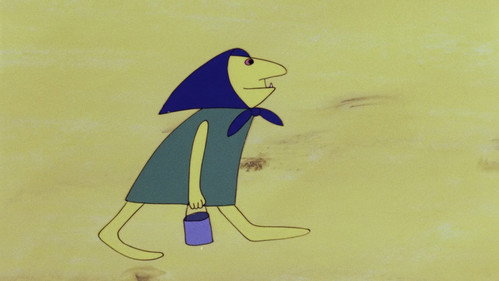


Series
All →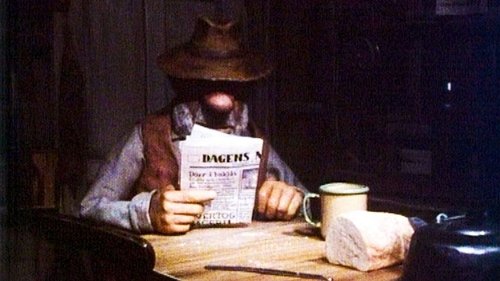
Bedtime cartoons for the whole household: the Bajeczki24 guide
Bajeczki24: bedtime cartoons from Poland and its neighbours, from The Adventures of Koziołek Matołek, Rex and Kitty Kotty to Moominvalley, Miffy and Friends, Bamse and Alfie Atkins
In Polish, a bajeczka is a little fairy tale, the kind told at the end of the day. For more than sixty years Polish television has kept a few minutes each evening, just before seven o'clock, for exactly that: a short cartoon or puppet film for small children, after which it is time for bed. The custom has a name of its own, the good-night story, and every country around Poland has its own version of it, with its own beloved heroes: a mole and two rabbits in Prague, an owl doctor in Budapest, a bear who eats thunder honey in Stockholm, a small white rabbit in Utrecht, a family of gentle trolls in Helsinki.
Bajeczki24 is a guide to 174 of these cartoons and children's films, made between 1947 and 2026. Seventy-nine come from Poland; the rest come from the Nordic countries, the Baltic states, the Netherlands and Flanders, Hungary, Slovakia, the Czech lands, Ukraine, Moldova, Croatia and Slovenia. There are 131 films and short films and 43 series. Each has its own page, with its story, its year and country, and a Watch now button that leads to the official services carrying it where you live.
The catalogue has been chosen for the whole household. Every title was read through by hand, and the selection keeps to work made for children and families: bedtime series, fairy tales, animal stories, short musical films and a handful of longer adventures. This part of Europe also makes a great many animated films for adult audiences, and those were left out. So, with regret, were a number of famous Polish series for which the data source holds too little artwork to make a proper page; what is here can be shown properly and found on real services.
This guide explains the bedtime tradition, walks through Poland and then each neighbouring region, describes the lists, suggests a first month of viewing, and ends with questions and answers. Every title named here has a page on Bajeczki24, and a click on its name opens that page.
The good-night story
The bedtime cartoon is a particular form, and it helps to know its rules. It is short, usually between five and ten minutes. It is calm: there may be mischief, but there is seldom danger, and the ending is always safe. It returns each evening to the same few characters, so that a child of three knows them as well as the family dog. And it is made with great care, because the studios that produced it were public institutions, staffed by artists who had trained as painters, sculptors and puppet makers and who took children seriously as an audience.
The first Polish programme of the kind is on Bajeczki24. Jacek i Agatka began in 1962, and its two heroes were about as simple as puppets can be: two small wooden heads, a boy's and a girl's, worn on the forefingers of the performer, with her own hands as their bodies. They chatted about the events of a child's day for a few minutes, said good night, and were adored. From that modest start grew a tradition that gave Polish childhood its faces for half a century.
Other countries arrived at the same idea in the same years. Czechoslovak television began its evening story in 1965, and its signature tune, sung by a little boy in a paper hat, is still played. Hungary had its evening tale, Sweden and Denmark their children's hour, and the Dutch a five-minute animal newspaper that the whole country watched before the news. Because these programmes were short and often had little dialogue, they were easily exchanged, and a child in Warsaw grew up with the Czech mole and the Hungarian owl as well as the Polish goat. Bajeczki24 gathers them in that spirit, as neighbours.
The home page is as plain as the site it is named for. A row of bold links at the top leads to Films, Series, Fairy tales, Poland and the A to Z index. Below it, the cartoons appear as wide pictures, three to a row, each with a small frosted label giving its length in minutes or its number of episodes, a few rounded tags, a bold title and a Watch link with an arrow. The first row shows the newest titles, the next the favourites, and then come rows for Poland, for fairy tales and for series.
Polish classics
Seventy-nine titles are Polish. The oldest, In the Time of King Krakus, was made in 1947 by Zenon Wasilewski and is counted as the first Polish puppet film made after the war years. It tells the legend that every child in Kraków knows: a dragon lives in a cave beneath the royal castle and troubles the town, until a clever young shoemaker thinks of a way to be rid of it. The puppets are stiff and stately, like figures from a Christmas crib, and the film has the charm of a thing made by hand at the start of something new.
The Adventures of Koziołek Matołek is drawn from the most famous Polish book for small children. Matołek is a goat of good heart and little sense who has heard that in the town of Pacanów goats are shod, like horses, and who sets off to find it. He goes by land, sea and air to every corner of the world except the right one, and the series of 1969 follows him in short rhyming episodes. Generations have learned the opening lines by heart, and the real town of Pacanów has put up a statue of him.
Rex is the best loved animal in Polish cartoons, a small white dog with brown patches who lives in a kennel in a country yard among hens, cats and a rather pompous cockerel. His films, which began in 1967 at a studio in the southern town of Bielsko-Biała, are wordless, with only music and the noises of the yard, and so they have been enjoyed far beyond Poland. Six are listed here. In Rex the Polyglot he teaches himself to speak to the other animals in their own languages. In Rex The Detective the hens ask him to find their missing eggs. Rex The Singer, Rex The Pal, Rex The Defender and Rex the Arbitrator show the same gentle, helpful nature at work.
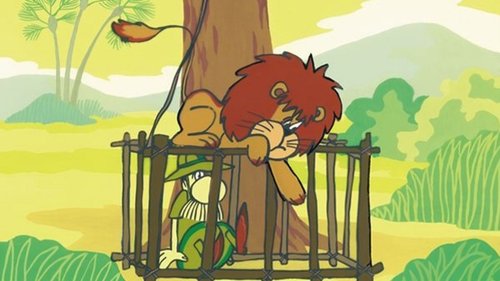
Pampalini the Animal Hunter is a comedy series of the late 1970s about a small, plump hunter with an enormous moustache who travels the world to catch a different animal in each episode and is outwitted by every one of them, from the hippopotamus to the anteater. Tajemnice Wiklinowej Zatoki follows a young muskrat and the other small creatures of a reedy bay through the seasons. Colargol zdobywcą kosmosu gathers, as a feature film, the space adventures of the little singing bear who was animated with puppets in Łódź for audiences across Europe.
The short films of the classic years are varied. Na podwórzu is a tale of a fair-haired boy and his dog. Admiral, by the painter-animator Witold Giersz, is a witty parable in which splendid ships sail out to meet each other. Blocks sets a group of small puppets in a world of toy bricks. Figa turns a coloured balloon into one shape after another, and The Toy plays with a sliding puzzle that will show a locomotive if only its squares can be put in order. New Year's Night tells one festive evening from three points of view.
There are live-action films for children too, from a tradition that Polish families remember fondly. Wyspa złoczyńców, from 1965, is an adventure in which a young museum worker follows clues to a hidden treasure along the Vistula. The Ring of Queen Ann sends three boys on holiday back in time to a castle of medieval knights. The End of the Holiday is a gentle story of a boy of fourteen in his last free summer, and Coloured Stockings is a pair of small, truthful tales about children by Janusz Nasfeter, the director who understood them best.
Polish cartoons today
The newer Polish series are made for the very young. Kitty Kotty is a small, brave, curious kitten from a set of picture books that are in almost every Polish nursery; each episode takes her through one ordinary first experience, a visit to the dentist, a night away from home, a quarrel with a friend, and shows that it can be managed. The Treflik Family is filmed with handmade puppets on miniature sets: a brother and sister, their parents and an uncle who can fix anything have small adventures, and each one ends in a song. Hug Me follows a father bear and his cub through the forest, and is as warm as its title.
Among the recent films, Basia. I’m Just Right brings to the screen a spirited girl of five from a series of books that Polish parents read aloud. The Amazing Adventures of Lost Socks 3: Socks in Space! answers the old question of where single socks go: each of them, it turns out, has left the washing machine for a life of its own, as a detective, a sheriff or an astronaut. A Great Worry is a simple, wise fable for family audiences, and The Thrown Away Book a story about loneliness and being found. Where is the New Year? has a family searching for the holiday when the clocks go wrong.
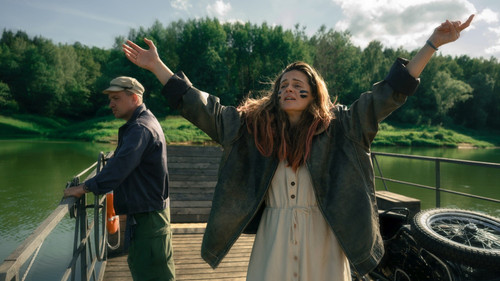
The live-action tradition continues with Pixie. The New Beginning, about a girl of eleven in a new town who believes in the little folk of Polish legend, Oskar, Patsy, and Baltic Gold, a detective adventure for children on the coast, and Grandpa, Let's Go!, in which a grandfather and grandson take to the road. The Boy at the Edge of the World is an animated adventure of 2026 set on a remote island.
Films for the ear
One of the treasures of this collection is a group of very short films made in the 1990s at the television animation studio in Poznań, each set to a famous piece of classical music. The idea was to give children a first meeting with Mozart, Beethoven, Chopin, Debussy, Grieg and Bizet in a form they could take in at one sitting, three to five minutes long, with pictures invented by a different artist each time. Fifty-one titles on Bajeczki24 are listed under Music, and most of them come from that series or from its descendants.
The Flight of the Bumblebee is made by moving real objects a frame at a time, and is as quick and comic as the music. Für Elise and Clair de lune are drawn on celluloid in the classic manner. In the Hall of the Mountain King, by Witold Giersz, wakes a small gnome among the fjords and sends him into the cave of the trolls as the tune gathers speed. The Toreador's Couplets is a joke in pencil about a town that turns into a bullring. Memories of Alhambra, Arabesque in G Major, Chinese Tambourine and The Old Castle, which borrows a mood from a tale by Hans Christian Andersen, are quieter pieces.
Mozart has several films to himself: The Magic Flute. Overture. Fragment, two movements of a divertimento, and three parts of the little night music, listed under their full titles, Eine Kleine Nachtmusik - Serenade in G major, KV 525, Eine Kleine Nachtmusik - Romanze Andante and Eine Kleine Nachtmusik - Rondo Allegro, the last of which sets a string quartet playing in a drawing room.
The most remarkable of these artists is Aleksandra Korejwo, who animates with coloured salt. She spreads the grains on a dark surface under the camera and moves them with a feather, so that every frame is swept away to make the next. The result looks like painting in motion, soft and glowing. The Spinner, Chopin and Jubilee Concert are hers. Mazurka and Etude are films by other hands to the music of Chopin, and Vibrating String – Chordophone is set to Bach. Cello and Ballade are by Joanna Jasińska, whose first film, Herd, was also made in loose salt.
These films are ideal for a household with children of different ages. The youngest watch the pictures; older children begin to hear how the music is built; and adults will be glad of five minutes of Debussy at the end of a long day. Because they are wordless, they travel as they are.
Films for the eye
The same studio made a companion series about painters, called Impressions, and twelve films are gathered under Painters. Each takes the pictures of one artist and sets them moving in his own manner. Vincent Van Gogh is painted on glass in thick, swirling strokes. Piet Mondrian is a dance of lines and coloured squares. Joan Miró lets the painter's stars, birds and curling signs wander about, Magritte plays with apples, hats and windows, and Gustav Klimt with gold.
Horse Portrait is a late work by Witold Giersz, who invented the technique of animating with oil paint in the 1960s and was still working in his nineties; it is a study of a horse's movement in a few strong brush strokes. The Wind and The Awakening, by Waldemar Mordarski, are drawn in salt and sand. These are films to look at together and talk about afterwards, and they make a good first lesson in how many ways there are to make a picture.
Polish fairy tales
Joanna Jasińska has spent many years on a cycle of films from Polish and European folk tales, made for a series whose title asks the viewer to paint a fairy tale, and several are here. The Golden Apple Tree and About Dogs and Cats begin, as such stories should, beyond the mountains and beyond the forests. Apolejka and her Donkey is a tale in praise of modesty, and It's Quite True! retells Andersen's story of the feather that became five hens. Milenka is about a peasant girl and a wonderful plant, Dunia – There and Back about a girl who can step into the world of her own drawings, and The Puzzle Cube takes its wizard and his daughter from a play by Shakespeare.
Twelve Months is the Slavic tale of the stepdaughter sent into the snow for strawberries, who meets the twelve brothers of the year around a fire. Glass Mountain sets three sons the task of climbing a slope that has defeated every climber. About Children's Toys comes from a book of philosophical fairy tales set in an imaginary kingdom. And Królestwo Zielonej Polany, a feature film of 1994, takes a small boy into the grass, where a kingdom of beetles and ants needs his help.
The Nordic countries
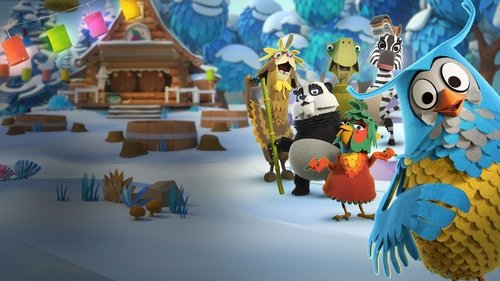
Twenty-three titles come from Sweden, Denmark, Norway and Finland, and they include some of the best known children's characters in Europe. Moominvalley is the newest screen version of the stories by the Finnish writer and artist Tove Jansson. The Moomins are round, pale, good-natured trolls who live in a tall blue house in a valley by the sea, with a mother who is always calm, a father who writes his memoirs, and a door that is open to every odd creature who passes. The series, made with computer animation that keeps the softness of the original drawings, is gentle, funny and a little wistful, and works for every age. Comet in Moominland is a restored version of an earlier animated film of the second book, in which Moomintroll and his friends set out to learn what the red star in the sky might be.
From Sweden comes Bamse - The World's Strongest Bear. Bamse is a small brown bear in a blue cap who becomes enormously strong when he eats his grandmother's special honey; his friends are a timid rabbit and a tortoise who has an invention for everything and a timetable for his meals and naps. He has been the hero of a weekly comic since 1973, and his rule, that strength is for helping and should hurt nobody, is known to every Swedish child. Alfie Atkins is quite different: an ordinary boy of five or six who lives in a flat with his father, has a secret friend whom only he can see, and meets the small problems of an ordinary day. The books by Gunilla Bergström, and the series made from them in 1979, are loved for their honesty.
Mama Moo and the Crow is about a cow who refuses to behave like one. She wants to ride a bicycle, climb a tree and learn to dive, and her friend the crow, who thinks all this most improper, always ends up helping. Sagan om Skrotnisse och hans vänner is a puppet series of 1985 set in a scrapyard, where a father and son build flying machines from other people's rubbish. Charlie's Climbing Tree gives a small city boy a place to lie on his back and think. Spindeln and Bytesdjuren are two short films of 2012 that turn children's dreams into pictures.
Denmark's best loved cartoon character is Circleen, an elf the size of a thumb who sleeps in a matchbox on the desk of the artist who draws her and plays with two mice. The films began in 1967 and are made of cut paper, with the artist's hands sometimes in view. Rita & Crocodile is a modern favourite: a very determined girl of four and the hungry crocodile who lives in her bathtub go fishing, camping and blueberry picking in episodes of five minutes. Troll Tales is drawn from a book of the forest people of the north. The Tale of the Wonderful Potato tells the history of the potato in Europe as a comic cartoon, and Skipper and Skeeto and KatjaKaj og BenteBent are for the very young.
From Norway come several recent short films that have travelled to children's festivals around the world. Little Grey Wolfy: Summer Party is a soft, hand-drawn story about a small wolf's birthday on a night of the full moon. The World's Middlest Fish is a comedy about a girl who becomes famous for catching the most average fish ever recorded. The Rumble-Bumble Rally turns the tidying of a bedroom into a race, and Tindra's Light is about a lighthouse keeper's daughter who must keep the lamp burning by herself for one night.
The Baltic states
Twenty titles come from Latvia, Lithuania and Estonia, three small countries with a strong tradition of puppet and drawn film. The founder of Latvian puppet animation, Arnolds Burovs, is represented by two films of the 1970s: Stolen Poodle, in which children help a kindly circus clown find his missing dog, and African Gift, about a parcel that arrives for a club of young naturalists. Roze Stiebra, who made the first Latvian drawn films, is here with Adventures of the Sausage, a nonsense tale in which a sausage finds itself in a barber's shop, in a ministry and at school.
The Tail belongs to a series in modelling clay about two comic friends, Munks and Lemijs. The Witch And The Cow and Tiny Shoes are early, playful shorts by Signe Baumane, later known for feature films. The newest Latvian work is especially fine. Hush Hush Little Bear is a film of five minutes in which two bear cubs play in the autumn woods while their parents gather food for winter, set to a folk lullaby and animated in wool; it was shown at the Berlin festival. Dust Fairies, Crazy Fox and The Dubna River Rascal, whose hero is a small mosquito who has trouble making friends, are for the same young audience.
Estonia's best loved children's book, about three tiny men named for the muff, the half-shoe and the moss beard they wear, became the film Three Jolly Fellows in 1990; they travel in a small red van and put the world right in their own fashion. The Mystery of Missing Socks sends a little girl under the bed after her father's socks and into a land of the creatures who take them. Troublemaker Tommy is set at an overcrowded zoo, and The Story of a Hare Boy is a brightly coloured short of 1976 about a young hare who would prefer to stay away from school. From Lithuania come BFF. Turbo Adventure Marathon, five funny stories about three best friends, Dominykas the Horse's Journey to the Stars, from a much loved Lithuanian book, and The Mystery of the Cactus.
The Netherlands and Flanders
Fourteen titles are in Dutch, and they come from one of the richest picture-book traditions in the world. Miffy and Friends needs little introduction. Miffy is a small white rabbit drawn by Dick Bruna in 1955 with a few thick black lines and four or five flat colours: two dots for eyes and a cross for a mouth. The books are square, small enough for a child's hands, and have been translated into more than fifty languages. The series of 2003 keeps their stillness and simplicity, and Dick Bruna's Miffy Storybook Classics: The Original Series is the earlier version, in which the pages of the books are brought to life almost unchanged.
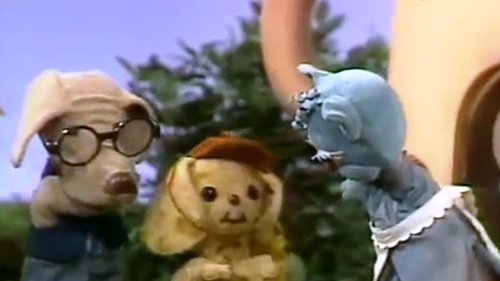
Frog & Friends comes from the books of Max Velthuijs, in which a green frog in striped swimming trunks and his neighbours, a duck, a pig, a hare and a rat, think about large matters, friendship, fear, being different, in very small words. Woozle & Pip are two puppies who live in a magic garden with a wise old tree, and Woezel & Pip op avontuur in de Tovertuin is their cinema film. Daily Fables is a new version of the programme that every Dutch family once watched before the evening news, in which the animals of a great forest read about each other's doings in a newspaper edited by an owl.
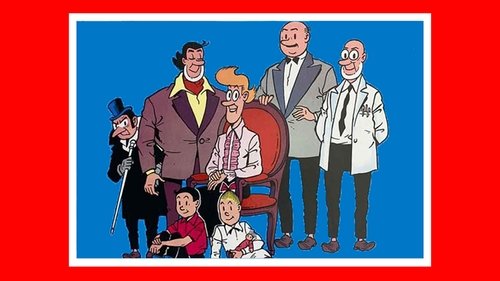
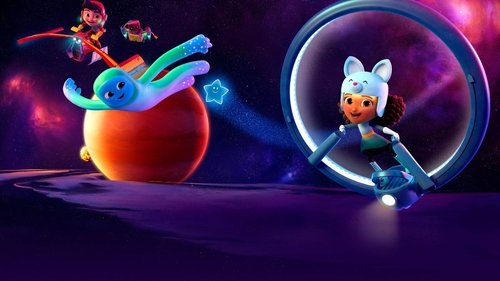
Boes is a comedy about a good-natured farmer who happens to be an ox, his friend the turtle and a farmyard of eccentrics; it was made with Japanese animators in 1988 and shown around the world. Suske en Wiske - De Poppenserie is the puppet series of 1975 with the boy and girl heroes of the most famous Flemish comic, made with the help of their creator. Interstellar Ella follows a girl of eight in the year 3021 who explores the galaxy on a flying skateboard. The Tinies DIYs is about toys who build things, and Dropje, De kameleon, The Bear and the Squirrel and Draken & Deuntjes, a programme of five musical fairy tales, are short films for the youngest.
Central Europe
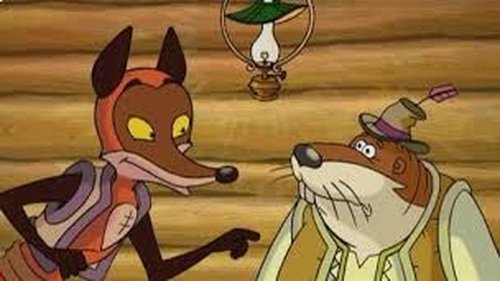
Twenty-two titles come from Hungary, Slovakia and the Czech lands. Hungarian children's animation had a golden age in the 1970s and 1980s at the Pannonia studio in Budapest, and three of its most famous series are here. Pom Pom meséi has a hero who can take any shape, a wig, a fur hat, a paintbrush, and who waits each morning on a branch for a small schoolgirl named Picur, sits on her head and tells her a story on the way to school; the stories are full of creatures with wonderful names. Kérem a következőt! is set in a forest surgery. Dr Bubó, an owl who has just qualified as a doctor, treats the complaints of the animals with the help of a formidable bear nurse, and the dialogue, all in rhyme, is as funny for adults as for children. Futrinka utca is a puppet series about the animals of one small street.
The Mézga Family and the Magic Machine is a late continuation of the most popular Hungarian cartoon comedy, about a family whose clever son builds machines that get them into trouble. A heap of muffins, Janó Manó és az elveszett harmatcseppek and Bogyó és Babóca 5. – Hónapok meséi, the film of a snail boy and a ladybird girl who are the favourite picture-book friends of Hungarian toddlers, are recent. Transylvanian Legendarium takes a brother and sister, with their grandfather, into the legends of the mountains, and Dreams on Wings is a short of 1968 by Marcell Jankovics, the great master of Hungarian animation.
Slovakia has produced one of the most thoughtful children's series of recent years. Mimi & Lisa are best friends who live in the same block of flats. Mimi is blind, and in each episode she shows the timid Lisa how to perceive the world by touch, sound and imagination, while Lisa shares what she sees; together they open a door in the building and step into an adventure. The series has won prizes across Europe, and Mimi and Liza – The Garden is its film. The Websters is about a large family of spiders who live in the lift machinery of a tower block, three generations with very human quarrels. Pásli ovce valasi, from 1972, follows two shepherds and their flock, and Jurošík is a comic series about a cheerful outlaw of the mountains. Circus of Red Poppy is a short film of a boy who sees a circus arrive by night.
The Czech titles include a piece of history. Kuťáci, made in 1976 by Lubomír Beneš, is the short film in which two clumsy handymen first tried to do a simple household job and reduced the room to ruins; they were to become, as a wordless series, among the most popular puppet characters in the world. Maryshka and the Wolf's Castle is a puppet fairy tale of a brave and faithful girl. The Lighthouse Keeper is a small poem of a film about a paper boat, and Old Prague Legends tells the tales of the city, its clock, its bridge and its clay giant, for young viewers. Dreams About Stray Cats and Eeny, Meeny, Miny, Moe! are recent shorts.
Ukraine, Moldova and the south
Sixteen titles come from further east and south. The animation studio in Kyiv produced, in the 1970s and 1980s, a body of short films of great colour and humour, and several are listed. The Fern Flower tells the folk tale of the lad who seeks the flower that blooms for a single moment on midsummer night and brings its finder fortune. Tales About The Cars gives three short stories to a bus, a lorry and a little car. The Wings, The Unlucky Star and The Chumaks' Way, named for the salt traders who crossed the steppe by ox cart and for the Milky Way that guided them, are drawn in the manner of Ukrainian folk painting. Once Upon a Time There Were Thoughts... is a small philosophical comedy about thoughts of different characters.
Mykyta the Fox, from 2007, was the first animated series made in independent Ukraine, from a classic verse tale of a cunning fox and the court of the lion king. Eskimo Girl is a wordless series for the very young about a little girl and her penguin friend in a world of snow, and 210 Good Deeds sends a pair of friends to do a good turn in each episode. Yellow Cat with Blue Eyes is a recent short.
From Moldova come two films of the Soviet period: Guguta the Postman, about the small boy in the enormous sheepskin hat who is the hero of the country's best known children's book and who decides to help the village postman, and The Kind Wizard, a folk tale of a peasant who frees a bird from a trap. Romania contributes a series about a little skylark born with only one wing, listed under its original title in the East list. Croatia sends Misho and Robin, about a curious kitten and a wise robin, and Slovenia Slipper Keeper Kitty, from a picture book that Slovene children have read for seventy years, in which a cat gathers up the slippers that untidy children leave about, and Spuffies.
Animal stories
Sixty-five titles have animals as their heroes, and the list is the natural place to begin with children under six. The cats lead: Kitty Kotty, the cat of Misho and Robin, the keeper of slippers. The dogs follow, with Rex in six films, the puppies Woozle & Pip and the poodle of the Latvian circus. Bears are everywhere in the north: Bamse, the cubs of Hush Hush Little Bear, the father and child of Hug Me. There is a goat who goes round the world, a cow who climbs trees, a frog who thinks, a rabbit drawn in six lines, a family of spiders, an owl with a medical degree, a fox at the lion's court and a muskrat in the reeds.
What is striking, when these are seen together, is how kind they are. The animal in the bedtime tradition is seldom a clown to be laughed at. He or she is a small person, with worries a child will recognise, and the stories are about how to behave: how to share, how to say sorry, how to be brave about something new. Rex makes peace between the cat and the bird; Frog asks what it means to be a friend; the mosquito of the Dubna river learns how to make one.
Longer films
Nineteen titles run for forty-five minutes or more, and they suit a weekend afternoon. The Polish live-action adventures have been described. Comet in Moominland is the best choice for a family film with young children. Królestwo Zielonej Polany and Colargol zdobywcą kosmosu are Polish animated features, and Jubilee Concert is a full programme of films in coloured salt set to great music. Woezel & Pip op avontuur in de Tovertuin and Mimi and Liza – The Garden are gentle films for the nursery age, and Maryshka and the Wolf's Castle is a puppet feature for those a little older.
Using Bajeczki24
The site keeps the plain look of the one it is named for: a white page, black type and one centred column. The row of bold links at the top opens Films, which lists the films and shorts; Series; Fairy tales; Poland; the A to Z index; and My List. The search box sits at the right of the same row. Type a title and matches appear as you type; original titles in Polish, Swedish, Dutch, Hungarian and the other languages are recognised as well as English ones.
Every cartoon has a page of its own. At the top are the picture, the title in English and in its original language, the year, the running time or the number of episodes, and the genres. Below come the story and the names of the director and the studio. The Watch now button sits beside the picture. Choose your country from the list, press the button, and JustWatch opens with the services that carry that cartoon where you live: subscription services, shops for rental and purchase, and free services supported by advertising. Poland heads the list of countries, and the national broadcasters and film archives of this part of Europe keep a good many of the older films on free official channels, so it is worth looking at the free column first.
My List is a shelf for the cartoons you would like to come back to. On any page, the Add to My List button puts the title on that shelf, which is kept inside the browser you are using; the My List link in the header row takes it down again. A button there turns the list into a small file that can be carried to another device. There is neither an account to make nor a password to keep, and the shelf is seen by you alone.
Watching with small children
A few practical notes may help. The bedtime series were made for children between two and seven, and their episodes are the right length for that age: one is a treat, two are a habit, and three are probably enough. The frosted label on each picture shows the number of episodes or the running time, so an evening can be planned in advance.
Many of the best titles here are almost wordless. Rex, the films set to classical music, the painter films, Eskimo Girl, Circleen and most of the Baltic shorts can be watched in any household whatever language is spoken at home. For the series with dialogue, the picture-book characters are widely dubbed: Miffy, the Moomins, Bamse, Frog and Mama Moo speak many languages, and the official services listed by JustWatch show which are available.
Some of the older films move more slowly than modern cartoons, and that is part of their value. A puppet film of the 1970s gives a child time to look: at the texture of the cloth, the painted sky, the way a head turns. Parents sometimes find that children who are used to very fast programmes need an evening or two to settle, and then ask for the slow ones by name.
The folk tales are told as folk tales, which means that a dragon may be outwitted and a stepmother may be unkind before matters are put right. The versions chosen here are mild, but a first viewing together is always a good idea, and is in any case the way these stories were meant to be shared.
The makers
Animation is a craft of small workshops, and it is worth knowing a few of the names behind these films. In Poland, the studio in Bielsko-Biała gave the country Rex and his friends, and the puppet studio in Łódź, whose name is a combination of the Polish words for small film forms, built Colargol and many others; its artists later won an Academy Award. The television studio in Poznań, founded in 1980, is the home of the music and painter films. Witold Giersz, born in 1927, painted his films directly in oils and returned in old age to finish a film inspired by cave paintings. Lechosław Marszałek drew Rex for twenty years.
In the north, Tove Jansson wrote and drew the Moomins on an island in the Gulf of Finland; Rune Andréasson created Bamse and insisted that his comic teach kindness, fairness and a little science; Gunilla Bergström wrote Alfie Atkins as an answer to children's books that she found too sweet. Hanne Hastrup has drawn Circleen in Copenhagen since the 1960s. In the Netherlands, Dick Bruna worked at the same desk in Utrecht for half a century, cutting his colours from paper, and Max Velthuijs won the highest international prize for children's illustration for Frog.
Further east, Attila Dargay drew Pom Pom and directed the best loved Hungarian animated features; József Romhányi, known as the rhyme champion, wrote the owl doctor's verses; Lubomír Beneš built the two handymen in Prague; and Katarína Kerekesová created Mimi and Lisa in Bratislava after working with blind children. In Riga, Arnolds Burovs turned from the puppet theatre to film at the age of fifty and made forty of them.
A first month
For a family new to these cartoons, here is one way to spend four weeks, a little each evening.
In the first week, begin where Poland began. Watch Jacek i Agatka to see how simple a bedtime programme can be, then two or three of the Rex films, and finish the week with The Adventures of Koziołek Matołek.
In the second week, go north. An episode of Moominvalley, one of Alfie Atkins and one of Rita & Crocodile make a fine evening, and Hush Hush Little Bear is the perfect last film before the light goes out.
In the third week, listen. Choose three of the music films each evening, perhaps The Flight of the Bumblebee, Für Elise and In the Hall of the Mountain King to start, and add one of the painter films for the eye.
In the fourth week, visit the neighbours: Miffy and Friends and Frog & Friends from the Netherlands, Pom Pom meséi from Hungary, Mimi & Lisa from Slovakia and Mykyta the Fox from Ukraine. At the weekend, watch Comet in Moominland together.
After that the lists are yours to explore. The Short films list, with 97 titles, will supply a story before bed for three months; the Fairy tales list holds 49; and the Top rated list gathers the titles with the highest scores from viewers.
How the cartoons were chosen
Every title on Bajeczki24 was selected by a person and checked by hand. The starting point was the record of animated and children's films and series in Polish and in sixteen neighbouring languages held by TMDB, which gave close to two thousand candidates. A title was considered only if it had a picture, a still image and a written description, since a page lacking those is of little use to anyone; that rule removed several hundred older Polish films for which the record is still thin. From the rest we set aside the many animated films made for adult audiences, anything frightening or cruel, and serials of more than 120 episodes. We then read the description of each remaining title, kept the ones a family could watch together, and looked a second time at any that raised a doubt.
The result has a clear character: 79 titles from Poland, 23 from the Nordic countries, 22 from Central Europe, 20 from the Baltic states, 16 from Ukraine, Moldova and the south and 14 from the Netherlands and Flanders; 131 films and shorts and 43 series. By period, 37 date from before 1980, 46 from 1980 to 1999, 19 from 2000 to 2009 and 72 from 2010 onwards. Each title appears on Bajeczki24 alone among our sites, so the catalogue is its own. Pictures and descriptions come from TMDB, and the Watch now links are provided by JustWatch, which records where each title is officially available country by country.
Questions and answers
Questions
What is Bajeczki24?
Bajeczki24 is a guide to 174 cartoons and children's films from Poland and its neighbours, made between 1947 and 2026 and chosen for the whole household. Each page gives the story, year and country, and a Watch now button that leads to the official services carrying the title in your country.
What does the name mean?
Bajeczki is the Polish word for little fairy tales, the short stories told to children at bedtime. The site is written in English and covers cartoons from seventeen languages.
Which cartoon should I watch first?
Start with Kitty Kotty, Miffy and Friends or one of the Rex films. The first-month plan in the guide suggests an order.
Is the catalogue suitable for small children?
Yes. Every title was screened by hand, and the selection keeps to bedtime series, fairy tales, animal stories and short musical films made for children and families.
Do the cartoons need subtitles?
Many have very little speech and can be followed in any language, and the picture-book series are widely dubbed. The services listed for each title show what they provide.
What are the music films?
They are short films of three to five minutes, each set to a famous piece of classical music, made by Polish artists for young viewers. Fifty-one titles are listed under Music.
How does My List work?
Press Add to My List on any cartoon page. The list is kept by your own browser, free of charge, and the My List link in the header row opens it.
Does Bajeczki24 host cartoons or downloads?
Bajeczki24 is a guide only. Every Watch now button leads to an official, licensed service.
